A category we are developing openly rather than pretending we have a long record in.
A sleep bag is an enclosed insulated textile used for sleeping, most commonly in camping and travel. A sleep system is a modular construction in which the shell, the fill weight and the size are specified independently, so one production platform can cover several temperature bands without a separate tooling cycle for each. The engineering variables are fill weight against temperature band, shell breathability, and closure integrity.
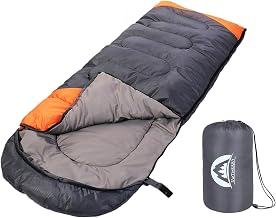
Specifying a textile without knowing the end use is how the wrong fill weight and the wrong construction get ordered. These are the real commercial applications.
| Application | What it demands of the specification |
|---|---|
| Camping and outdoor retail | Three-season and winter bags sold by temperature rating. |
| Travel and hospitality-adjacent | Lightweight compressible formats for travel and guest use. |
| Compression pod formats | Wrapped or pod-shaped constructions that enclose the body more fully. |
| Children and nursery | Sized sleep bags with hood and foot-box geometry. |
| Gift and unboxing formats | A bag bought as a gift and opened on camera — the unboxing moment is the product. |
We quote by construction — yarn count, grams per square metre, weave — not by marketing name. If you have a reference product, send it and we will reverse the construction.
| Material | Typical specification | Notes |
|---|---|---|
| Shell — polyester | Polyester or poly-cotton, 90–140 GSM | Cost-efficient, good durability, widely used in volume outdoor |
| Shell — ripstop nylon | Ripstop nylon, often 20D–70D | Lightweight, strong, packs small — travel and premium outdoor |
| Shell — cotton / flannel lining | Cotton flannel inner, 150–200 GSM | Warmth perception for cooler-climate retail |
| Shell — brushed poly-cotton | Brushed poly-cotton, 130–180 GSM | Soft-touch lining at lower cost than cotton flannel |
| Fill — hollow fibre | Siliconised hollow polyester fibre | Standard synthetic fill; weight mapped to temperature band |
| Fill — microfibre | Fine-denier microfibre | Softer loft and better warmth-to-weight than standard hollow fibre |
| Fill — down | Duck or goose down, 550–800 fill power | Premium lightweight positioning; needs fill-power specification |
| Lining / insulation layer | Bonded wadding or laminated lining | Used where a single-shell construction cannot hold the loft |
Commercial decisions live in these figures, not in adjectives. Where a number depends on your specification we say so rather than publishing a figure we have not confirmed.
| Parameter | Range / value |
|---|---|
| Status | In development — not a catalogue item |
| Format | Rectangular / mummy / pod / wrapped / modular |
| Shell | Polyester / nylon ripstop / cotton / brushed poly-cotton |
| Fill | Hollow fibre / microfibre / down — weight specified per band |
| Module variables | Size · fill weight · outer shell — chosen independently |
| Closure | Zip / wrap / drawstring / hood and foot-box geometry |
| In-house processes available | Cutting · filling · zip and closure setting · shaped tooling · compression · carton engineering |
| Not yet published | Temperature rating and fill-weight mapping |
Size and geometry · shell fabric · fill material and weight · closure system · hood and foot-box design · compression packing · labelled retail format
Spec sheet, drawing, or the physical reference product.
Built at the exact fabric and fill weight we intend to run.
Written approval on a sealed sample before any bulk production.
Carton engineering at packing. Loading from Ningbo and Shanghai.
Static demo — the live site posts to our CRM.
Each answer starts with the answer, then explains — written to be read by a person and quotable by a search engine.
This is a category we are developing rather than an established line, and we say so plainly. What we can already do is cutting, filling, closure setting, shaped tooling, compression and carton engineering — which is most of the production. What we are still confirming is the sleep-spec performance numbers.
The principle is that size, fill weight and outer shell are specified independently rather than locked together. One production platform can then cover a three-season product and a winter product without a second tooling cycle, which lowers the cost of extending your range.
Once they are tested. We are not going to assert a temperature rating from a table — the rating has to be measured against the fill-weight mapping we actually produce. Until then we describe the capability and not the number.
A bag bought as a gift, sold blind or semi-blind, and opened on camera. The unboxing moment becomes the product rather than a consequence of it. It is a genuinely open territory in this category — if you are sourcing there, we would rather hear your specification early, before tooling is fixed.
Mixed containers across categories are the normal case, not a special request.