For bulky soft goods the shipping cost per unit frequently exceeds the manufacturing cost. Compression is the largest single margin lever in the project — and it is the one most suppliers cannot touch.
Compression furniture is soft or semi-rigid seating and bedding that is vacuum-compressed after manufacture so it ships flat and expands on arrival. The commercial mechanism is container economics: reducing the shipped volume per unit reduces the freight cost per unit, which on bulky goods is often the dominant cost line. The technical requirement is that the compressed product must recover to its intended shape and firmness after unpacking.
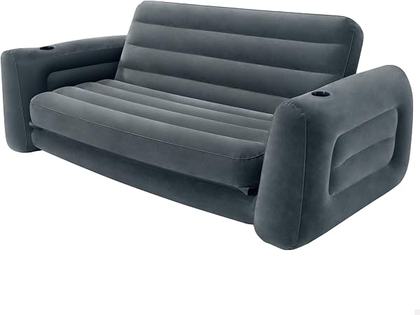
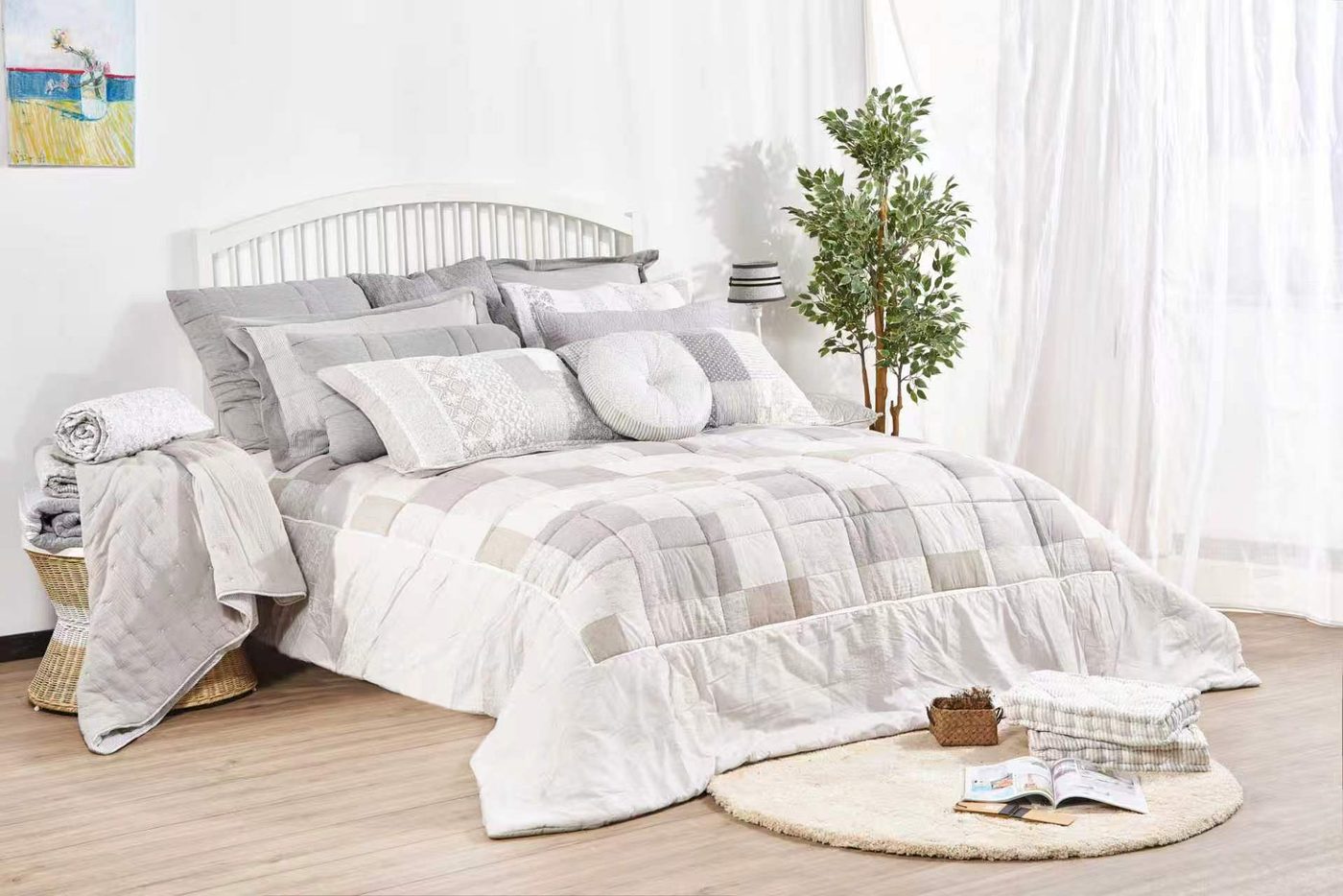
Specifying a textile without knowing the end use is how the wrong fill weight and the wrong construction get ordered. These are the real commercial applications.
| Application | What it demands of the specification |
|---|---|
| E-commerce furniture | Flat-packed seating and mattresses sold online and delivered by parcel rather than by furniture freight. |
| Marketplace and DTC furniture brands | Where per-unit inbound freight to a fulfilment centre decides the margin. |
| Importers of bulky soft goods | Where container utilisation is the primary negotiation. |
| Modular and multi-piece seating | Products bought as modules and assembled by the customer. |
| Guest and occasional furniture | Storage-conscious formats for apartments and short-let accommodation. |
We quote by construction — yarn count, grams per square metre, weave — not by marketing name. If you have a reference product, send it and we will reverse the construction.
| Material | Typical specification | Notes |
|---|---|---|
| Cover — woven cord / polyester | Polyester or poly-cotton cord weave | The most common e-commerce sofa cover |
| Cover — linen-look | Polyester linen-look weave | Premium retail positioning |
| Cover — velvet / velour | Polyester velvet | Higher-perceived-value retail |
| Core — polyurethane foam | Moulded or block foam, various densities | Density sets firmness and recovery behaviour |
| Core — high-resilience foam | HR foam, typically 30–40 kg/m³ | Better recovery after prolonged compression |
| Core — memory foam layer | Viscoelastic foam layer | Comfort layer over a support core |
| Core — latex | Moulded natural latex | Resilient, breathable, premium |
| Core — fibre / wadding | Bonded polyester fibre | Lower-cost soft components and back cushions |
Commercial decisions live in these figures, not in adjectives. Where a number depends on your specification we say so rather than publishing a figure we have not confirmed.
| Parameter | Range / value |
|---|---|
| Compression method | Vacuum compression with or without roll-packing |
| Recovery characteristics | Tested at the sample stage against the intended firmness |
| Standard formats | Sofa / sofa bed / corner unit / modular block / mattress / mattress topper |
| Carton engineering | Carton size derived from the compressed dimension and pallet constraints |
| Foam density | Specified per component — seat, back, arm |
| Unsuitable products | Frame-and-spring constructions, rigid frames, hard furniture |
| Certification | ISO 9001:2015 no. 1325Q10284R5S (factory) |
| MOQ / lead time | Confirmed against your specification at quotation |
Design and geometry · foam density per component · cover fabric and colour · compression ratio · carton dimension and marking · retail labelling · assembly format
Spec sheet, drawing, or the physical reference product.
Built at the exact fabric and fill weight we intend to run.
Written approval on a sealed sample before any bulk production.
Carton engineering at packing. Loading from Ningbo and Shanghai.
Static demo — the live site posts to our CRM.
Each answer starts with the answer, then explains — written to be read by a person and quotable by a search engine.
No, and this is the honest limit of the category. Compression works on soft and semi-rigid constructions — all-foam and fibre-core seating and bedding. Rigid frames, springs and hard furniture do not compress usefully. We run compression and forming in-house, but we are not a frame furniture factory, and we will say so at the enquiry stage rather than take an order we cannot hold.
That is the whole technical risk, and it depends on foam density and how long the product stays compressed. High-resilience foam recovers better than low-density foam. We test recovery at the sample stage against the firmness you specify, rather than asserting it. If a specification will not recover, we will tell you before you commit.
It depends entirely on the product's uncompressed volume and how far it ships. For bulky soft goods, freight per unit often exceeds manufacturing cost, so the compression ratio becomes the dominant margin lever in the whole project. We will show you the before-and-after carton figures against your actual specification rather than quoting a generic percentage.
We do, working from the compressed dimension. Carton engineering is done at packing — while the product is being made — rather than after the goods are finished and the container is being booked. Barcode, marking and retail labelling are applied at the same stage.
Yes — mattresses and mattress toppers roll-pack and vacuum-compress well, and they are among the most established products in this category.
Mixed containers across categories are the normal case, not a special request.